Visual Novel vs Interactive Fiction: What’s the Difference?
Visual novel vs interactive fiction: how text adventures, choice-based IF and visual novels differ in art, interaction and tools, and where they meet.
On this page 7 sections
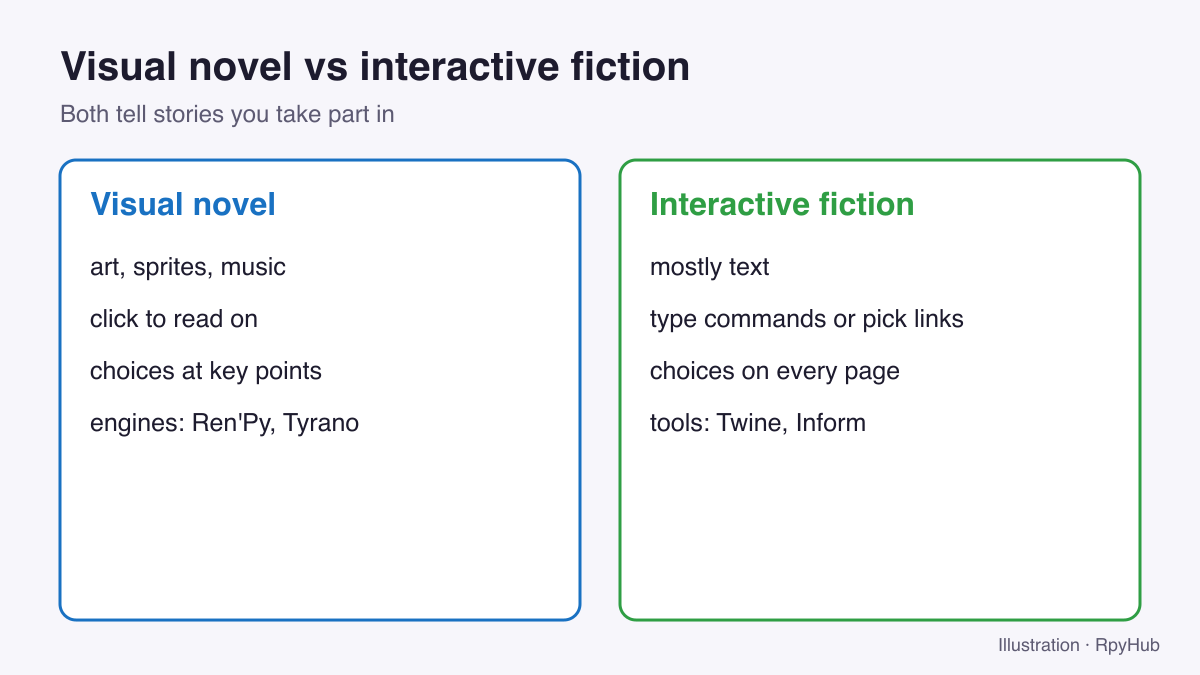
Both visual novels and interactive fiction (IF) are stories you take part in, and both put words at the centre of the experience. So what’s the real difference in visual novel vs interactive fiction? In short: visual novels add art, music and a “click to read on” rhythm, while interactive fiction is mostly text and usually asks you to act far more often, by typing commands or picking links on every page.
Key Takeaways
- Interactive fiction is text-first: parser games (type commands) and choice-based stories (click links).
- Visual novels combine text with character art, backgrounds and music; you mostly read and choose at key points.
- Common IF tools: Twine, Inform, ChoiceScript. Common VN engines: Ren’Py, TyranoBuilder.
- The two overlap in choice-based storytelling; many writers move from one to the other.
What Is Interactive Fiction?
Interactive fiction is a broad name for text-based stories the reader interacts with. There are two big families:
Parser IF (text adventures)
You read a description and type commands such as open door or ask librarian about map. The game’s parser interprets them. This style goes back to classic text adventures like Zork, and today is often made with tools such as Inform.
Choice-based IF
You read a passage and click one of several links or options to continue. It’s closer to a gamebook. Twine is the best-known free tool for it, and ChoiceScript powers many commercial choice-based games.
What Is a Visual Novel?
A visual novel presents the story through a text box over backgrounds and character sprites, with music, sound and sometimes voice acting. You click to advance line by line and make choices at key moments. Our visual novel beginner’s guide covers the format in detail.
Side-by-Side Comparison
| Visual novel | Interactive fiction | |
|---|---|---|
| Presentation | Text + sprites, backgrounds, music | Mostly text, sometimes images |
| How you interact | Click to advance; choices at key points | Type commands or pick links frequently |
| Pacing | Line by line, like a play | Page or passage at a time |
| Puzzles | Rare (some hybrids) | Common in parser IF |
| Typical tools | Ren’Py, TyranoBuilder, Naninovel | Twine, Inform, ChoiceScript |
| Team | Often writer + artist(s) + musician | Often a single writer |
Where They Overlap
The line blurs in choice-based stories. A Twine game with character portraits and music starts to feel like a visual novel; a visual novel with choices on every screen starts to feel like choice-based IF. Many creators start in Twine to test a branching story, then move it to a VN engine like Ren’Py once they have art. See visual novel engines compared if you’re choosing a tool.
Which Should You Try?
- You love reading and want maximum interaction: try choice-based IF.
- You enjoy puzzles and exploring with words: try parser IF.
- You want characters you can see and hear, with a cinematic feel: start with visual novels.
Frequently Asked Questions
Is a visual novel a type of interactive fiction?
In a broad sense, yes: both are interactive stories. In practice, “interactive fiction” usually means text-first games, while “visual novel” means text with art and music.
What is the difference between Twine and Ren’Py?
Twine makes text-based, link-driven stories that run in a browser. Ren’Py makes visual novels with images, music and save systems for desktop and mobile.
Are text adventures interactive fiction?
Yes. Parser-based text adventures are the classic form of interactive fiction.
Can I turn a Twine story into a visual novel?
Yes, by rewriting it in a VN engine such as Ren’Py and adding art, music and the visual novel’s line-by-line pacing.
Conclusion
Interactive fiction is text-first and asks you to act often; visual novels add art and music and let you settle into the story between choices. Both are great ways to experience stories you help shape.
Ready to read? Browse the visual novel catalog.





Comments
0